 We help people get the compensation they deserve.
How to Report a Nursing Home
Nursing homes are meant to provide residents with a safe and caring environment. Unfortunately, some residents suffer abuse and neglect in nursing homes, which can result in serious harm and even death. By learning how to report nursing home abuse, you can be prepared to protect your loved one should mistreatment occur.
Why Take Legal Action?
By filing a nursing home abuse lawsuit, you can seek financial compensation and justice from those who caused you or a loved one harm.
Results Secured
- $2.2 million for a Rhode Island resident who had a heart attack
- $2 million for the family of a California patient with dementia who passed away due to negligence
- $1.5 million for a woman in Minnesota with stage 4 bedsores


Fact-Checked and Legally Reviewed by: Julie Rivers
Nursing Home Abuse Reporting: An Overview
Nursing home abuse and neglect happen all too frequently and can endanger the lives of residents, especially those who are frail or have underlying health conditions.
If you suspect that your loved one has been the victim of abuse or neglect, you can report the incident to your state’s Department of Public Health.
Many states have laws that protect the identities of those who report nursing home abuse, so you can make an anonymous complaint and get your family member the help they need.
You can also report nursing home abuse by:
- Calling a nursing home abuse hotline
- Contacting your local Adult Protective Services (APS)
- Reaching out to a nursing home ombudsman
- Reporting concerns to doctors or other medical professionals
Call 911 if your loved one is in immediate danger. Emergency personnel can investigate the situation and get them to safety.
Nursing home reporting can also be done with the help of lawyers. They may also be able to pursue justice and compensation to help cover the cost of a new facility where they can receive the care they deserve.
7 Ways to Report Nursing Home Neglect or Abuse
Public health agencies and private organizations have systems in place for addressing nursing home complaints and ensuring that residents are safe from harm.
While families often have several options for how to report nursing home abuse, 7 resources are listed below.
1. State Department of Health
Each state’s Department of Health accepts complaints about abuse and neglect. In most cases, you can report nursing home abuse by calling the agency, filling out an online form, sending an email, or mailing a letter.
Tip: Your complaint should include the name of the assisted living facility, the specific issue related to your loved one’s care, and other details that can help officials conduct a thorough investigation.
Your identity will not be released to the nursing home or staff members, so you don’t have to worry about anyone retaliating against you or your loved one.
2. Law Enforcement
You can report nursing home abuse to your local police. The police can take immediate action if a family member has been harmed or has passed away from their injuries.
They can also file criminal charges if your loved one has been the victim of a physical attack, sexual assault, or other crimes.
3. Adult Protective Services
APS protects vulnerable adults, including seniors and individuals with disabilities, whose well-being may be affected by neglect, abuse, or exploitation.
Depending on your state, you can report nursing home abuse to APS by using an online portal or calling a hotline.
4. A Nursing Home Ombudsman
You can also report nursing home abuse to an ombudsman, who is in charge of advocating for residents in nursing homes and assisted living facilities.
Every state has an Office of the Long-Term Care Ombudsman, with local programs that protect the well-being of nursing home residents.
An ombudsman for nursing homes investigates allegations of mistreatment and advocates for residents to ensure they are safe and that their rights have not been violated.
5. Nursing Home Abuse Hotlines
Another option for how to report a nursing home is by calling an elder abuse helpline.
Hotlines for nursing home abuse reporting include:
- Eldercare Locator at 1-800-677-1116
- National Center on Elder Abuse at 1-855-500-3537
- SAMHSA 988 Suicide and Crisis Hotline at 988
These toll-free hotlines are staffed by trained professionals who can listen to your nursing home complaints and help you get assistance.
6. Medical Professionals
Doctors and other health care providers can help you figure out whether your loved one’s symptoms are related to nursing home neglect.
They can perform an examination and order tests to confirm that a loved one was mistreated and ensure that they get treated for their nursing home abuse injuries.
Health care professionals are mandated reporters. If they suspect that a nursing home resident has been abused, they have a duty to alert the authorities.
7. Nursing Home Abuse Lawyers
Nursing home abuse law firms can also help victims report abuse and neglect and hold negligent facilities accountable for the harm they’ve caused.
LawFirm.com has partnered with top firms that have secured over $332 million for families across the country. Our legal partners never charge any upfront or hourly fees and can help families in all 50 states.
Get a free case review now to see if one of our legal partners can help your family secure justice.
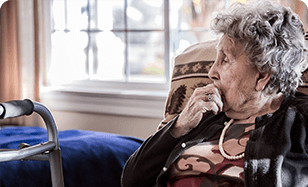
Who Do You Report Abuse to in a Nursing Home?
There are several different people you can report suspicions of nursing home abuse to. Each one can document your nursing home complaint, conduct an investigation, and ensure that your loved one is safe.
Medicare suggests that families first talk with the staff providing care to see if they can get to the bottom of what’s going on.
If the issue isn’t resolved, the agency says to speak with:
- The supervisor
- The social worker
- The director of nursing
- The administrator
- Your doctor
Nursing homes certified by Medicare or Medicaid are required to post the contact information for state agencies that oversee facility complaints. You can use that information for nursing home abuse reporting.
Regardless of who you decide to report the abuse to, consider speaking to a nursing home abuse lawyer. An attorney may be able to file a nursing home abuse lawsuit on your behalf and fight for the compensation and justice you deserve.
“Report your concerns to the nursing home’s leadership if you feel comfortable doing so. In some cases, especially when serious harm has occurred, it may be better to speak with a nursing home abuse or neglect lawyer first.”
– Ricky LeBlanc, Nursing Home Abuse Lawyer
Nursing Home Abuse Reporting Requirements
Federal and state laws require nursing homes to take reports of abuse seriously and investigate allegations quickly.
Under federal regulations, Medicare- and Medicaid-certified nursing homes must report suspected abuse or neglect involving a resident. Facilities are required to investigate complaints and notify state authorities within specific timeframes.
In many cases:
- Serious injuries must be reported within 2 hours
- Other allegations must be reported within 24 hours
These nursing home abuse reporting rules are designed to ensure that claims of abuse are documented and investigated promptly.
If a nursing home fails to properly report or investigate abuse, the facility may face fines, regulatory penalties, or lawsuits.
Families who suspect a facility ignored signs of abuse may wish to speak with a nursing home abuse lawyer, who can help investigate what happened and determine whether the facility violated reporting laws.
Call (888) 726-9160 right now or chat with a case manager to find out about your legal options – for free.
Warning Signs of Nursing Home Abuse or Neglect
By knowing the signs of nursing home abuse, you can take quick action to protect your family member and help put an end to abusive practices at the facility.
Warning signs may vary but can include:
- Emotional abuse: Anxiety, fear, depression, and changes in sleep patterns and behavior
- Neglect: Infections, bedsores (especially stage 3 and stage 4 pressure ulcers), and poor hygiene
- Physical abuse: Bruises, welts, sores, burns, cuts, and broken bones
- Sexual abuse: Stained bedding or clothing, development of sexually transmitted diseases (STDs), and bleeding or bruising around the genitals
If you suspect nursing home abuse or neglect, jot down notes and document what you see. Take photos and videos of any injuries or other evidence of abuse.
Track any changes in your loved one’s appearance, mental or emotional health, and behavior. Pay particular attention to any changes in their routine, like a different room or caretaker.
Use the information above on how to report a nursing home to file a complaint against the facility and protect your loved one from further harm.
Documentation for Reporting Nursing Home Abuse
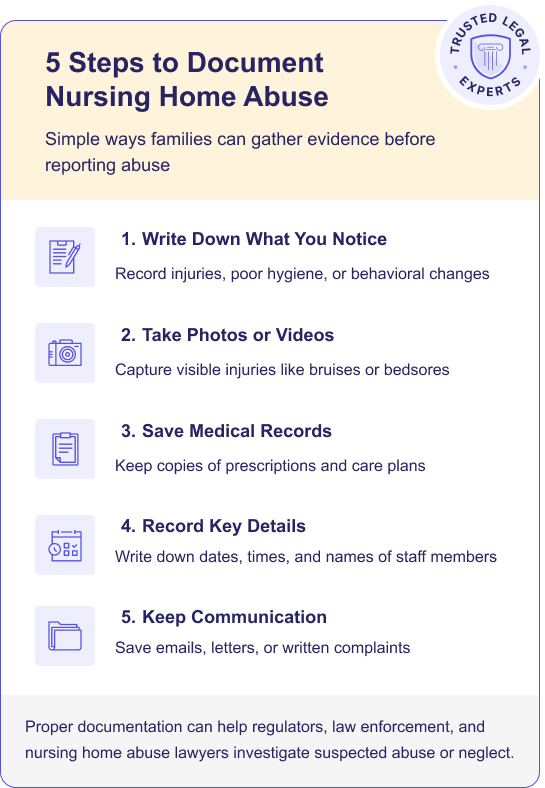
If you suspect abuse or neglect in a nursing home, documenting what you observe can help strengthen your report and support any investigation.
Detailed documentation can provide important evidence for state regulators, law enforcement, and nursing home abuse lawyers reviewing the situation.
When documenting suspected nursing home abuse, consider:
- Writing down observations such as injuries, poor hygiene, or sudden behavioral changes
- Taking photos or videos of visible injuries, unsafe conditions, or signs of neglect
- Keeping copies of medical records or care plans if they are available to you
- Recording dates, times, and the names of staff members involved
- Saving communication with the facility, including emails or written complaints
This information may help investigators determine what happened and whether the nursing home failed to provide proper care.
If you believe a nursing home’s negligence caused serious harm, a nursing home abuse lawyer may also be able to help investigate the case and pursue compensation.
Reasons for Reporting Neglect in a Nursing Home
Reporting nursing home neglect or abuse can help protect vulnerable residents and hold facilities accountable for unsafe conditions or poor care.
When abuse or neglect is reported, state agencies and other authorities can investigate the situation, correct problems at the facility, and take action against staff members who may have harmed residents.
Reporting nursing home neglect or abuse may help:
- Document the incident for possible legal action
- Protect your loved one from further harm
- Prevent abuse from happening to other residents
- Trigger an official investigation into the facility’s practices
- Hold negligent nursing homes accountable
Even if you are unsure whether neglect has occurred, reporting your concerns can allow professionals to evaluate the situation and determine whether a resident’s rights or safety are at risk.
Families who suspect serious neglect or abuse may also wish to speak with a nursing home abuse lawyer, who can help investigate the case and determine whether compensation may be available.
Download our Free Guide to Choosing a Nursing Home Abuse Attorney to find a top lawyer who can help your family.


Get Legal Help for Nursing Home Abuse
Finding out that a loved one has been abused or neglected in a nursing home can be saddening and traumatic. Our team at LawFirm.com is here to support nursing home abuse victims and families.
Many families who have reached out to us for legal help have been able to start the healing process and move forward with their lives knowing that justice has been served.
Our legal partners can help families:
- Hold negligent facilities accountable
- Pursue compensation
- Report nursing home abuse
The attorneys we work with never charge any upfront or out-of-pocket fees and can help families across the country.
Call (888) 726-9160 now or get a free case review to see if they can help your family during this challenging time.
FAQs About How to Report a Nursing Home for Neglect
Families have several options to report a nursing home for neglect or abuse.
Parties you can report a nursing home to include:
- A nursing home abuse hotline
- Adult Protective Services
- The police in your area
Additionally, a nursing home abuse lawyer may be able to help you report abuse and take legal action against a negligent care facility. Get a free case review to see if one of our trusted legal partners can fight for you.
It may be possible to report nursing home abuse online and anonymously through your state’s Department of Health website.
Anonymous reporting allows you to ensure your loved one’s safety without fear of retaliation from the nursing home or its staff.
Red flags for nursing homes include signs that residents are not receiving proper care or that abuse or neglect may be occurring.
Warning signs can include:
- Bedsores (pressure ulcers) or other untreated medical conditions
- Behavioral changes, including fear, anxiety, or withdrawal
- Frequent staff turnover or understaffing
- Poor hygiene, dirty clothing, or unsanitary living conditions
- Sudden weight loss, dehydration, or malnutrition
- Staff members refusing to allow private visits with your loved one
- Unexplained injuries, such as bruises, cuts, burns, or broken bones
If you notice these warning signs, consider documenting what you observe and reporting nursing home abuse suspicions to the appropriate authorities. A nursing home abuse lawyer may also be able to help investigate the situation.
Nursing home neglect occurs when a facility or caregiver fails to provide the level of care a resident needs to maintain their health, safety, and well-being. Neglect may be intentional or the result of understaffing, poor training, or inadequate supervision.
However, neglect is never okay and can cause serious harm. Call (888) 726-9160 now to see if a nursing home neglect lawyer in our network can help your family.
If you suspect abuse or neglect in an assisted living facility, you can report it to several agencies that investigate complaints and protect vulnerable residents.
Common ways on how to report elder abuse at assisted living include:
- Contacting your state’s health department or licensing agency, which regulates assisted living facilities
- Calling Adult Protective Services (APS) to report suspected elder abuse or neglect
- Reaching out to your state’s Long-Term Care Ombudsman, who advocates for residents and investigates complaints
- Contacting local law enforcement if the resident is in immediate danger or has suffered serious injuries
When making a report, try to include details such as the name of the facility, the resident involved, the type of suspected abuse or neglect, and any evidence you have documented.
You can reach out to your state’s health department, social services, or the local authorities to report nursing home neglect.
Additionally, a nursing home neglect lawyer may be able to report a facility and help you sue for neglect to pursue compensation for your loved one’s injuries.

Fact-Checked and Legally Reviewed by: Julie RiversEldercare Advocate
- Editor
Julie Rivers is a dedicated eldercare advocate with over 15 years of experience in nursing home neglect and abuse cases. Inspired by her mother’s battle with Alzheimer’s, she blends legal expertise and personal passion to support victims. An MBA graduate and active Alzheimer’s Association volunteer, Julie fights for better eldercare policies and justice for affected families.

Written by: Rae Theodore
Rae Theodore is a writer and editor with more than 30 years of experience in legal publishing. She earned a bachelor’s degree in English from Pennsylvania State University.
- Medicare.gov. (n.d.). “Reporting & resolving nursing home problems.” Retrieved from https://www.medicare.gov/what-medicare-covers/what-part-a-covers/reporting-problems-in-a-skilled-nursing-facility.
- National Archives. (2026). “Code of Federal Regulations.” Retrieved from: https://www.ecfr.gov/current/title-42/chapter-IV/subchapter-G/part-483.
- U.S. Department of Health and Human Services. (2024). “How do I report elder abuse or abuse of an older person or senior?” Retrieved from https://www.hhs.gov/answers/programs-for-families-and-children/how-do-i-report-elder-abuse/index.html.
- Sokolove Law. (2025). “Report Nursing Home Abuse.” Retrieved from https://www.sokolovelaw.com/nursing-home-abuse/report-abuse/.