 We help people get the compensation they deserve.
Talcum Powder Cancer
For decades, talcum powder was used to keep skin dry and comfortable. However, growing evidence shows that some talc products were contaminated with asbestos, a known cause of ovarian cancer, mesothelioma, and other serious cancers. If you or a loved one developed talcum powder cancer, you may be eligible for compensation.
Why Take Legal Action?
By filing a product liability lawsuit, you can pursue financial compensation and justice from the companies that caused you or a loved one harm.
Results Secured
- $40 million for a veteran exposed to asbestos from Goodyear gaskets
- $1.16 million for a Roundup® victim in North Dakota
- $575,000 for a man in Florida who suffered chemical burns from Just for Men® hair dye

Does Talc Cause Cancer?
Exposure to talc has been linked to an increased risk of developing several types of cancer. Talc may become contaminated with asbestos, a known carcinogen, during the mining process, putting consumers in harm’s way.
The World Health Organization (WHO) and the International Agency for Research on Cancer (IARC) classify asbestos-contaminated talc as carcinogenic to humans. Even trace amounts of asbestos can cause diseases like ovarian cancer and mesothelioma.
The evidence linking cancer and talc has led to thousands of talcum powder lawsuits and multimillion-dollar verdicts against manufacturers, including Johnson & Johnson (J&J). Many companies were aware of the link between cancer and talc but failed to warn consumers.
LawFirm.com has a network of asbestos attorneys who have secured over $10.7 billion for families impacted by mesothelioma and other asbestos-related illnesses.
Compensation from an asbestos lawsuit can help families cover medical expenses related to talcum powder cancer and hold negligent manufacturers accountable.
Get a free case review now to see if an experienced talcum powder lawyer may be able to fight for the compensation and justice you deserve.
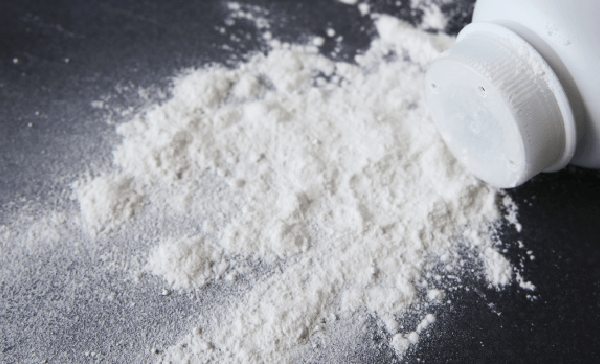
What Was in Talcum Powder That Causes Cancer?
The main danger in talcum powder comes from asbestos. Talc and asbestos are both naturally occurring minerals that can form side by side. When talc is mined, it can easily become contaminated with asbestos fibers, which are proven to cause cancer.
For decades, some cosmetic and industrial talc products were not tested with methods sensitive enough to detect these tiny fibers. As a result, certain powders, including popular body and baby powders, were later found to contain trace amounts of asbestos.
Asbestos exposure is directly linked to mesothelioma and ovarian cancer. When asbestos fibers are inhaled or applied in the genital area, they can become trapped in tissue, causing inflammation and cell damage that may lead to cancer 10-50 years later.
Health care professionals stress that no level of asbestos exposure is safe, which means even small amounts in talc can be hazardous. This contamination has driven growing concern and major litigation over the safety of talcum powder products.
Talcum Powder and Cancer Types
Research and court cases have linked talc exposure to several forms of cancer, depending on how the product was used and whether it contained asbestos fibers.
When talc is inhaled or applied to the body, microscopic particles, including asbestos, in some cases, can become embedded in tissue. Over time, this chronic inflammation and cellular damage may trigger the development of cancer.
Talcum powder exposure has been linked to several serious cancers, including:
- Mesothelioma
- Ovarian cancer
- Lung cancer
- Cervical cancer
- Endometrial cancer
- Stomach cancer
- Testicular cancer
Find out more about cancers caused by talcum powder use below. Each diagnosis has unique risk factors and medical evidence connecting it to talc exposure.
Mesothelioma
When asbestos-contaminated talc is inhaled, microscopic fibers can lodge in the lining of the lungs (pleura) or abdomen (peritoneum). Over decades, this exposure may lead to mesothelioma — a rare, aggressive cancer caused by asbestos.
In a National Library of Medicine study, 166 individuals who developed mesothelioma had substantial exposure to cosmetic talc products, and in 122 of those cases — or about 73% — talc was the only known source of asbestos exposure.
Mesothelioma lawsuit results demonstrate the serious risk. A jury ordered Johnson & Johnson to pay nearly $1 billion to the family of Mae Moore, a grandmother who died from mesothelioma linked to baby powder.
Ovarian Cancer
Use of talcum powder in the genital area has been associated with a higher risk of ovarian cancer. Researchers believe asbestos fibers or talc particles can travel through the fallopian tubes, lodge in the ovaries, and cause chronic inflammation that may lead to cancer.
Women who used talcum powder for feminine hygiene had a 33% higher risk of developing ovarian cancer than non-users, according to Epidemiology. Other studies detected talc particles embedded in ovarian tumors, supporting a biological link between cancer and talc.
In one ovarian cancer and talc lawsuit, a Missouri jury awarded $4.69 billion to 22 women with ovarian cancer linked to Johnson & Johnson’s talc products. While the award was later reduced to $2.12 billion, the plaintiffs still received significant compensation.
Call (888) 726-9160 right now or chat with a case manager to see if you may be eligible for compensation for talcum powder cancer. It costs nothing to speak with us.
Lung Cancer
Inhalation of talc has been linked to an increased risk of lung cancer, particularly among patients with long-term or occupational exposure. Talc particles can become trapped in the lungs, causing inflammation and tissue scarring that may lead to cancer.
Workers exposed to asbestos-free talc had nearly twice the rate of lung cancer deaths compared to the general population, as noted by the National Library of Medicine. Research suggests asbestos contamination may further heighten the risk.
Rubber workers exposed to Emtal’s industrial talc secured a $72.5 million talc settlement for lung cancer and other asbestos-related diseases.
Cervical Cancer
Regular use of talcum powder in the genital area may increase the risk of cervical cancer. Talc and asbestos particles can migrate through the reproductive tract, causing cellular damage in cervical tissue over time.
Women who used genital talc had a 1.79 times higher risk of developing cervical cancer compared to non-users, according to a study published in Scientific Reports.
Although cervical cancer is less commonly cited in asbestos lawsuits than some other talcum powder cancers, case reviews have found talc particles embedded in cervical and pelvic tissue, supporting the possible link between cervical cancer and talc.
Endometrial Cancer
Endometrial cancer, which begins in the lining of the uterus, has also been examined in connection with talcum powder use in the genital area.
Postmenopausal women who used talcum powder for feminine hygiene had a 21% higher risk of endometrial cancer compared to non-users, as noted in Cancer Epidemiology, Biomarkers & Prevention. The risk increased to 24% when use occurred at least once per week.
Although evidence linking talc to endometrial or uterine cancer is limited, the findings suggest that talc exposure could play a role in certain gynecologic cancers, especially when asbestos contamination is present.
Stomach Cancer
Some research has explored a possible link between talcum powder and stomach (gastric) cancer, especially in occupational settings involving inhalation of talc dust that might be contaminated with asbestos.
Workers exposed to talc were about 21% more likely to develop stomach cancer than those who were not exposed, according to the National Library of Medicine.
At this time, evidence linking consumer talcum powder use to stomach cancer is limited, but the findings raise concerns about the potential impact of inhaling or ingesting talc particles over long periods.
Testicular Cancer
Some research has explored a potential connection between testicular cancer and talc. Scientists have theorized that talc particles could cause chronic inflammation if they come into contact with the scrotal or groin area through the use of body powders.
Talcum Powder Cancer Lawsuit Compensation Amounts
Thousands of patients have filed talcum powder and cancer lawsuits, claiming that use of talc-based products led to ovarian cancer or mesothelioma. Manufacturers like Johnson & Johnson are accused of failing to warn about known talc cancer risks.
Talcum powder cancer lawsuit settlements and verdicts include:
- $966 million to the family of Mae Moore, an 88-year-old California woman who died from mesothelioma linked to Johnson & Johnson baby powder
- $45 million for the family of a woman who died from mesothelioma after decades of baby powder use
- $42 million to a Massachusetts man diagnosed with mesothelioma after years of using J&J’s talcum powder brands
- $15 million for another mesothelioma victim exposed to asbestos-contaminated talc
- $8 million to a Massachusetts woman whose mesothelioma was linked to talc exposure
- $18.8 million talc verdict that was later resolved in a J&J talcum powder settlement
- $75 million settlement with the state of Mississippi to end a consumer protection lawsuit alleging J&J failed to warn about the dangers of cancer and talc-based baby powder
- $260 million mesothelioma verdict that was later overturned on appeal, with a new cancer and talc trial ordered
- $700 million settlement to resolve a multistate probe over claims J&J misled consumers about talc powder cancer risks
Nearly 70,000 talcum powder lawsuits are still pending against Johnson & Johnson in a federal multidistrict litigation (MDL). The company’s proposed $8 billion global settlement to resolve ovarian cancer claims was rejected by a bankruptcy judge, allowing these cases to continue in court.
If you or a loved one developed talcum powder cancer after using talc-based products, you may be owed significant compensation. A talcum powder lawyer in our network may be able to fight for compensation and justice on your behalf.
Talc Cancer Risk Factors
Not everyone who used talcum powder will develop cancer, but certain factors can increase the risk, especially with long-term exposure or products contaminated with asbestos.
Key cancer and talc risk factors include:
- Contaminated product brands: Older Johnson & Johnson Baby Powder and other pre-2020 talc-based products have been linked to asbestos contamination in court evidence.
- Frequent or long-term talc use: Daily use of baby or body powder over many years increases potential exposure to asbestos fibers.
- Genital application: Strong evidence indicates that using talc-based personal care products in the genital area may lead to an increased risk of ovarian cancer.
- Inhalation exposure: Breathing in talc dust during regular use or from contaminated cosmetic products can raise the risk of mesothelioma or lung cancer.
- Occupational exposure: Working in talc mining, manufacturing, or cosmetic production may result in higher asbestos exposure levels and a greater risk of talcum powder cancer.
If you used talc-based powders and later developed cancer, it’s worth having your history reviewed by an experienced talcum powder lawyer to see if you may qualify for compensation.
Get Help From a Talc and Cancer Lawyer
Navigating a talcum powder cancer lawsuit can be overwhelming, especially while managing your health. That’s why it’s crucial to have a skilled attorney on your side.
An experienced talcum powder lawyer can help you:
- Explain if you qualify for compensation
- Gather the right evidence
- File your cancer and talc claim within legal time limits
- Fight for the highest compensation possible
The asbestos attorneys in our network can help cancer patients in all 50 states and never charge any upfront costs or hourly fees. Together, they’ve recovered over $10.7 billion for families.
Call (888) 726-9160 right now or get a free case review to see if a top talcum powder attorney can fight for you.
Cancer and Talc FAQs
The main cancers linked to talcum powder use are ovarian cancer and mesothelioma, both of which have been associated with asbestos contamination in talc products.
Researchers continue to study whether talc exposure may also contribute to lung, cervical, or endometrial cancers, particularly among patients with long-term or occupational exposure.
If you’ve been diagnosed with talcum powder cancer, you may be eligible for compensation through a talcum powder lawsuit. Get started with a free, no-obligation case review.
Health concerns about Johnson and Johnson’s talcum powder stem from evidence that some products were contaminated with asbestos, a known carcinogen.
Although the company maintains its baby powder was safe, it ended U.S. sales in 2020 and discontinued talc-based powder worldwide in 2023, switching to a cornstarch formula instead.
Most health experts recommend avoiding talc-based products, since there’s still a risk of asbestos contamination. While many companies have switched to talc-free or cornstarch-based alternatives, some powders and cosmetics may still contain talc.
The U.S. Food and Drug Administration (FDA) does not currently ban talc but continues to monitor products for asbestos. Choosing talc-free options is the safest way to reduce potential talcum powder cancer risks.
No. Johnson and Johnson stopped selling talc-based baby powder in the U.S. and Canada in 2020 and discontinued it worldwide in 2023, replacing it with a cornstarch-based formula.
While the company maintains its talc was safe, health concerns and ongoing lawsuits over asbestos contamination led to the global phaseout.
Yes. Research shows that talc powder can cause cancer when it’s contaminated with asbestos, a known carcinogen. Asbestos exposure has been directly linked to mesothelioma, ovarian cancer, and other serious illnesses. Even small amounts of asbestos are considered unsafe.
While studies on asbestos-free talc are less clear, many health experts and agencies, including the World Health Organization (WHO) and the International Agency for Research on Cancer (IARC), warn that asbestos-contaminated talc poses a proven cancer risk.
Makeup can cause cancer if the talc is contaminated with asbestos. Talc and asbestos occur naturally together, and when asbestos fibers end up in cosmetic talc, they’re a known cause of cancers like mesothelioma and ovarian cancer.
For talc that’s asbestos-free, the evidence linking it to cancer is limited and remains inconclusive. If you want to minimize risk, choose talc-free cosmetics or brands that certify rigorous asbestos testing.
Researchers believe talcum powder causes cancer in the cervix when particles from talc-based products enter the reproductive tract. Over time, these particles can trigger inflammation and cellular damage.
Repeated exposure may allow these microscopic particles to reach reproductive tissues, where they can remain for years and potentially lead to abnormal cell growth.
When talcum powder is used regularly in the genital area, tiny particles, especially those contaminated with asbestos, can travel through the reproductive tract and reach the ovaries. These particles may cause chronic inflammation, scarring, and cellular damage that can lead to ovarian cancer.
Multiple studies have found that women who used talc-based powders for many years face a higher risk of developing ovarian cancer. Health agencies agree there’s no safe level of asbestos exposure, which makes contaminated talc particularly dangerous.
If you or a loved one developed ovarian cancer after using talc-based products, call (888) 726-9160 now to see if a talcum powder lawyer can help you pursue compensation.

Fact-Checked and Legally Reviewed by: Rae Theodore
Rae Theodore is a writer and editor with more than 30 years of experience in legal publishing. She earned a bachelor’s degree in English from Pennsylvania State University.
- Akron Beacon Journal. (2023). “One company sickened thousands of Akron rubber workers with decades of lies. What we know.” Retrieved from: https://www.beaconjournal.com/story/news/2023/02/09/emtal-company-sicken-thousands-akron-rubber-workers-talc-litigation-settlement/69866893007/.
- American Association for Cancer Research Journals. (2010). “Perineal Use of Talcum Powder and Endometrial Cancer Risk.” Retrieved from: https://aacrjournals.org/cebp/article/19/5/1269/67782/Perineal-Use-of-Talcum-Powder-and-Endometrial.
- American Cancer Society. (2024). “Talcum powder and cancer.” Retrieved from: https://www.cancer.org/cancer/risk-prevention/chemicals/talcum-powder-and-cancer.html.
- Bloomberg News. (2025). “J&J effort to use bankruptcy to end talc cancer claims rejected.” Retrieved from: https://www.bloomberg.com/news/articles/2025-03-31/j-j-effort-to-use-bankruptcy-to-end-talc-cancer-claims-rejected.
- Daily Journal. (2025). “Jury awards nearly $1B to family of woman who died from asbestos-linked talc.” Retrieved from: https://www.dailyjournal.com/articles/387927-jury-awards-nearly-1b-to-family-of-woman-who-died-from-asbestos-linked-talc.
- International Agency for Research on Cancer. (2023). Volume 136: Talc and acrylonitrile. Retrieved from: https://monographs.iarc.who.int/news-events/volume-136-talc-and-acrylonitrile/.
- Judicial Panel on Multidistrict Litigation. (2025). MDL-2738 Tag-along Transfer 1-22. Retrieved from: https://www.jpml.uscourts.gov/sites/jpml/files/MDL-2738-Tag-Along-Transfer-1-22.pdf.
- Law360. (2025). “J&J Hit With $966M Verdict In Calif. Talc Lung Cancer Case.” Retrieved from: https://www.law360.com/articles/2396928/j-j-hit-with-966m-verdict-in-calif-talc-lung-cancer-case.
- National Library of Medicine. (2017). “Occupational Exposure to Talc Increases the Risk of Lung Cancer: A Meta-Analysis of Occupational Cohort Studies.” Retrieved from: https://pmc.ncbi.nlm.nih.gov/articles/PMC5610800/.
- National Library of Medicine. (2023). “Exposure to cosmetic talc and mesothelioma.” Retrieved from: https://pmc.ncbi.nlm.nih.gov/articles/PMC9847157/.
- National Library of Medicine. (2018). “Talc exposure and risk of stomach cancer: Systematic review and meta-analysis of occupational cohort studies.” Retrieved from: https://pubmed.ncbi.nlm.nih.gov/30100164/.
- Reuters. (2023). “J&J unit goes bankrupt second time to pursue $8.9B talc settlement.” Retrieved from: https://www.reuters.com/legal/jj-unit-goes-bankrupt-second-time-pursue-89-bln-talc-settlement-2023-04-04/.
- Scientific Reports. (2021). “The association between douching, genital talc use, and the risk of prevalent and incident cervical cancer.” Retrieved from: https://www.nature.com/articles/s41598-021-94447-3.
- Sokolove Law. (2025). “Talcum powder lawsuit.” Retrieved from: https://www.sokolovelaw.com/product-liability/talcum-powder/.
- U.S. Food and Drug Administration. (2024). “Talc.” Retrieved from: https://www.fda.gov/cosmetics/cosmetic-ingredients/talc.