 We help people get the compensation they deserve.
Appealing Disability Denials: Q&A With Sokolove Law Insurance Bad Faith Lawyer
When a serious illness or injury prevents you from working, long-term disability insurance is supposed to serve as your safety net. Unfortunately, many policyholders face wrongful claim denials, leaving them without the income they counted on.
When an insurance company denies a valid disability claim, they may be acting in bad faith — an industry term for when insurers unfairly delay, underpay, or refuse benefits that policyholders are rightfully owed.
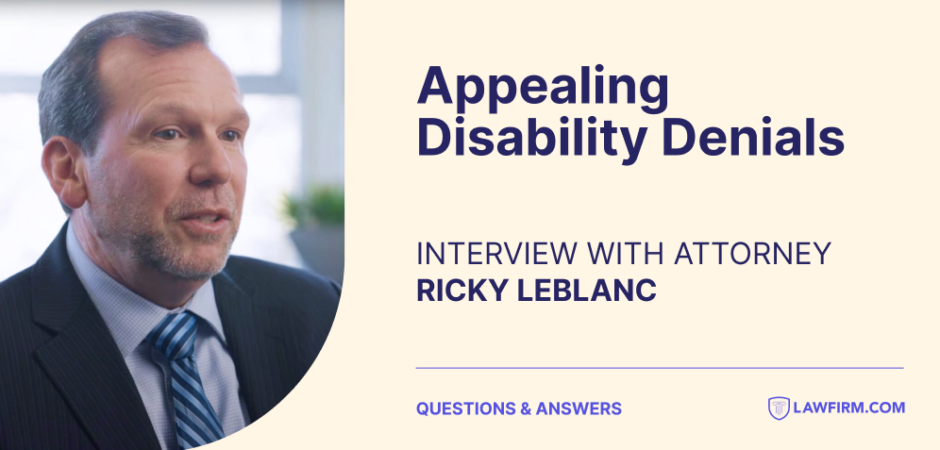
Rather than accept the denial, policyholders may have options, including internal appeals and lawsuits. LawFirm.com spoke with Ricky LeBlanc, disability insurance bad faith lawyer and managing attorney at Sokolove Law, about how this process works and what can be done when insurers act unfairly.

Q: Why do insurance companies deny long-term disability claims?
A: Unfortunately, disability denials often come down to profits. Insurance companies are for-profit businesses, and paying out large disability claims cuts into their bottom line. As a result, they may look for any reason to deny a valid long-term disability claim.
Sometimes they’ll say there isn’t enough medical evidence or that your condition doesn’t meet their definition of “disability.” Other times, they use missed deadlines, paperwork errors, or pre-existing condition clauses to justify a denial. We also see cases where insurers rely on their own independent medical reviewers who never actually examine the claimant.
What’s important to remember is that an insurance denial isn’t always the end of the road. You have the right to appeal, and if the insurer’s actions were unreasonable, you may be able to recover the benefits you’re owed.
Q: What does it mean when an insurance company acts in bad faith?
A: Bad faith basically means the insurance company isn’t playing fair. When you buy a policy, your insurer has a legal duty to act in good faith and handle your claim fairly.
If they delay payment without a good reason, deny a valid claim, or twist policy language to avoid paying, that may be considered acting in bad faith.
I’ve seen cases where insurers ignore medical evidence, provide vague explanations for a denial, or make people jump through endless hoops hoping they’ll give up. That kind of behavior breaks the trust policyholders place in their insurance company.
When we prove bad faith, the court can hold the insurer accountable — not just for the benefits they owe, but sometimes for additional damages caused by their misconduct.
Q: What are signs that my insurance company acted in bad faith?
A: There are a number of red flags that may suggest your insurer is acting in bad faith, meaning they’re not just denying a claim, but doing so unfairly or unreasonably.
Watch for long, unexplained delays, vague or shifting reasons for denial, or requests for endless paperwork even after you’ve provided proof of your condition. You may also notice they ignore medical evidence or apply the policy language in a way that benefits them.
If your disability coverage is provided through your employer, it’s likely governed by the Employee Retirement Income Security Act (ERISA). This federal law sets strict rules for how insurers must handle claims and appeals, and it gives you the right to challenge unfair or unreasonable conduct.
Q: What should I do after my LTD claim is denied?
A: If your LTD claim is denied, it is important to act quickly. First, carefully read the denial letter. It should tell you why the insurer rejected your claim and the deadline that applies for appealing.
From there, try to gather every piece of relevant documentation, like your policy, your claim file, updated medical records, doctor statements, and work history. You can use this information to craft a formal appeal of your insurer’s denial. Then, it’s time to reach out to a lawyer. Your insurer isn’t playing around, and you shouldn’t either.
At Sokolove Law, we regularly assist people after a long-term disability denial by analyzing the insurer’s reasoning, identifying the weaknesses in their decision, and building the strongest appeal possible on our clients’ behalf.
Q: How long do I have to appeal a denied LTD claim?
A: Many clients only have 180 days from the date they receive the denial letter to file an appeal, but that’s not a hard-and-fast rule for everyone. If your plan is covered by ERISA, that 180-day window is the minimum time insurers must give you — and missing it can mean losing your right to challenge their denial.
When you work with a lawyer, it takes a lot of the guesswork out of the process. You may be worried about missing deadlines or proving your disability, but this is an everyday matter for experienced lawyers.
We know what’s needed to show your condition is long-term, prove it qualifies under your insurer’s plan, and get them to take your claim seriously enough to pay your benefits.
Q: Can I handle an appeal myself, or do I need a bad faith insurance lawyer?
A: Technically, you can file an appeal on your own, but it can be challenging and, ultimately, risk the success of your case. Insurance companies have teams of lawyers and specialists working to protect their interests. Without experienced legal help, you’re often at a serious disadvantage.
A bad faith insurance claim lawyer knows exactly how insurers operate and what evidence they can’t ignore. It’s easy to miss deadlines or make mistakes that could affect your claim, especially while you’re dealing with a serious health issue.
At Sokolove Law, we’ve helped clients across the country secure results against some of the largest disability insurance providers, including Unum and other major carriers.
Q. If my appeal is denied, can I file a bad faith lawsuit against my insurance company?
A: If your insurer has repeatedly denied your appeals, you may be able to sue them for acting in bad faith. It depends on the type of policy you have. If your disability insurance came through your employer, it’s probably governed by ERISA, which limits your ability to sue for bad faith.
However, if you purchased your policy privately and it’s not an ERISA plan, you may have the option to pursue a bad faith insurance lawsuit after the appeals process. In these cases, additional compensation may be available if the insurer acted unreasonably or intentionally withheld benefits.
Q: What evidence can strengthen my LTD appeal or insurance bad faith lawsuit?
A: The strongest cases are built on solid evidence showing how your medical condition affects your ability to work. This includes doctors’ statements, medical evaluations, and expert opinions from vocational specialists who can verify you can’t perform the basic duties of your job.
It’s also important to keep documentation of every interaction with your insurer — emails, letters, call logs, and copies of forms you’ve submitted. Patterns of delayed responses or shifting explanations for the denial can become key evidence in long-term disability litigation.
Having the right evidence can make all the difference, and an insurance bad faith lawyer can work to ensure nothing gets overlooked.
Q: How much compensation can I receive from a bad faith insurance lawsuit?
A: Every case is different, but compensation in a bad faith lawsuit against an insurance company can be significant, especially when the insurer’s conduct was deliberate or malicious. At a minimum, you can recover the policy benefits you were originally owed, plus interest for the delay in payment.
In some cases, courts may also award additional damages for the harm caused by the insurer’s bad faith. This can include financial losses, emotional distress, and in some states, punitive damages meant to punish the company for serious misconduct.
While no two outcomes are alike, these cases can deliver real accountability and financial relief for people who’ve been treated unfairly by their insurance company.
Q: How much does it cost to hire a disability insurance litigation lawyer?
A: Most people are surprised to learn that hiring a long-term disability litigation attorney doesn’t require any upfront payment. At Sokolove Law, we work on a contingency fee basis, which means you pay nothing unless we recover money for you.
Our fee comes out of the compensation we obtain — not your pocket. This approach allows clients to take on major insurance companies without worrying about hourly rates or legal bills piling up.
Q: How can a bad faith insurance claim attorney help with my case?
A: Many clients come to me after their disability claim has been denied, and they’re often at their breaking point. They’re dealing with serious health complications, struggling to pay their bills, and facing a system that can feel stacked against them.
That’s where a bad faith insurance attorney can make a real difference. My team investigates every aspect of the claim — from the insurer’s communications and medical reviews to internal policies that may show a pattern of unfair denials.
At Sokolove Law, we’ve helped people nationwide challenge disability denials and recover the benefits they were rightfully owed. A bad faith insurance claim isn’t just about money — it’s about justice, accountability, and giving people the chance to move forward with dignity.
Get Help From Top Disability Benefits Litigation Lawyers
If your disability claim was wrongfully denied, you don’t have to face the insurance company alone. These corporations count on policyholders giving up when the process gets too hard, but support is available.
LawFirm.com has partnered with experienced disability benefits litigation lawyers who have successfully challenged some of the nation’s largest insurers — and secured results for policyholders who were treated unfairly.
Our trusted legal partners have recovered over $148 million total for clients impacted by wrongful disability claim denials.
Call (888) 726-9160 right now or get a free case review to take the next step toward justice and financial security.

Fact-Checked and Legally Reviewed by: Rae Theodore
Rae Theodore is a writer and editor with more than 30 years of experience in legal publishing. She earned a bachelor’s degree in English from Pennsylvania State University.